Buy bueroeinrichtungen.eu ?
We are moving the project
bueroeinrichtungen.eu .
Are you interested in purchasing the domain
bueroeinrichtungen.eu ?
domain@kv-gmbh.de · 0541-91531010
Buy bueroeinrichtungen.eu ?
What is faster, SN1 or SN2?
SN2 reactions are generally faster than SN1 reactions. This is because SN2 reactions involve a single step where the nucleophile attacks the substrate at the same time the leaving group leaves, leading to a concerted mechanism. In contrast, SN1 reactions proceed through a two-step mechanism involving the formation of a carbocation intermediate, which can be a slower step. Additionally, the rate of SN2 reactions is dependent on the concentration of both the substrate and the nucleophile, while the rate of SN1 reactions is only dependent on the concentration of the substrate. **
Which reaction, SN1 or SN2, occurs in secondary halogen cycloalkanes?
In secondary halogen cycloalkanes, the SN1 reaction is more likely to occur. This is because the SN1 reaction involves a two-step process where the leaving group leaves first, forming a carbocation intermediate, and then the nucleophile attacks. The stability of the carbocation intermediate is important, and in secondary halogen cycloalkanes, the carbocation intermediate is more stable due to the presence of the neighboring alkyl groups. This makes the SN1 reaction more favorable in secondary halogen cycloalkanes compared to the SN2 reaction. **


Similar search terms for Sn2
Top-Angebote
Products related to Sn2:
-
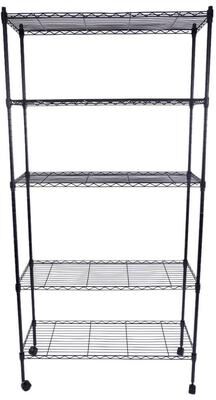
karlinc 5 Tier Rolling Steel Shelving Unit Wire Shelves Garage Shelving Storage Racks【EASY TO ASSEMBLE】: The storage shelves is easy to assemble,This wire shelf structure is very simple ,No tools required to assemble it.The shelving unit is simple to assemble,You only need to spend fifteen minutes to install it.storage shelves wire...57,37 $*Shipping: 0,00 $Secure redirect to the provider
-
Garvee 5-Shelf Shelving, Storage Shelves Metal Bookshelves for StorageAdjustable Shelves: 5-tier adjustable shelving unit features multi-hole side poles for easy height customization on each shelf, combining stylish design with versatile home storage shelves and office organization racks Reinforced Support: The 5 Tier…104,99 $*Shipping: 0,00 $Secure redirect to the provider
-
Uplift Picks Clear Drawer Beauty Storage Box For Vanity Desks 3 StoreyCreate a calmer beauty space where every essential has its place. This makeup organizer features a transparent body and pullout drawer, making cosmetics easy to see, store, and access. Its compact shape provides practical organization without...74,49 $*Shipping: 0,00 $Secure redirect to the provider



-
Which type of nucleophilic substitution is known as SN1 or SN2?
The type of nucleophilic substitution known as SN1 or SN2 is SN1 (Substitution Nucleophilic Unimolecular) and SN2 (Substitution Nucleophilic Bimolecular). SN1 reactions proceed through a two-step mechanism involving the formation of a carbocation intermediate, while SN2 reactions occur in a single step with simultaneous bond formation and bond breaking. The choice between SN1 and SN2 mechanisms depends on factors such as the nature of the substrate, nucleophile, and solvent. **
-
What is the question about the SN1 and SN2 reactions in chemistry?
The question about SN1 and SN2 reactions in chemistry typically revolves around the differences between these two types of nucleophilic substitution reactions. Students may be asked to compare the reaction mechanisms, the role of the solvent, the stereochemistry of the products, and the factors that influence the reaction rate. Additionally, they may be asked to predict the major products of a given reaction based on the reaction conditions and the nature of the substrate. **
-
Is the synthesis of 1-bromopropane in the laboratory an SN1 or SN2 mechanism?
The synthesis of 1-bromopropane in the laboratory typically follows an SN2 (nucleophilic substitution bimolecular) mechanism. In this mechanism, the nucleophile directly attacks the substrate, displacing the leaving group in a single step. This is favored for primary alkyl halides like 1-bromopropane due to the absence of steric hindrance. SN1 (nucleophilic substitution unimolecular) mechanisms are more common for tertiary alkyl halides where the carbocation intermediate is stabilized by surrounding alkyl groups. **
-
When does nucleophilic substitution occur via the SN1 and when via the SN2 mechanism?
Nucleophilic substitution occurs via the SN1 mechanism when the substrate is a tertiary or secondary alkyl halide, as the carbocation intermediate formed in the reaction is stabilized by the surrounding alkyl groups. On the other hand, nucleophilic substitution occurs via the SN2 mechanism when the substrate is a primary or methyl alkyl halide, as the backside attack of the nucleophile on the substrate occurs simultaneously with the departure of the leaving group. The choice between SN1 and SN2 mechanisms depends on the nature of the substrate and the reaction conditions. **


According to which mechanism do the two molecules react: SN1, SN2, E1, or E2?
The mechanism by which two molecules react depends on the specific reaction conditions and the nature of the reactants. If the reaction involves a nucleophile attacking a substrate and forming a carbocation intermediate, it is likely to proceed via an SN1 mechanism. On the other hand, if the reaction involves a nucleophile directly displacing a leaving group in a single step, it is more likely to proceed via an SN2 mechanism. E1 and E2 mechanisms involve the elimination of a leaving group to form a double bond, with E1 involving the formation of a carbocation intermediate and E2 occurring in a single step with the nucleophile acting as a base. **
How do you calculate the proportion of reactions following SN1 and SN2 when 2-bromobutane reacts with hydroxide ions under specific reaction conditions and yields 40% following SN1 and 60% following SN2?
To calculate the proportion of reactions following SN1 and SN2 when 2-bromobutane reacts with hydroxide ions, you can use the given percentages. If 40% of the reactions follow SN1 and 60% follow SN2, you can determine that the ratio of SN1 to SN2 reactions is 4:6, which simplifies to 2:3. This means that for every 2 reactions that follow SN1, there are 3 reactions that follow SN2. **
Top-Angebote
Products related to Sn2:
-
Winado 62.9''W Adjustable Storage Shelves NSF Wire Shelving Unit Multiple rows Shelving for Storage Rack Shelves"Introductions: 【62.9''W Monster Size Wire Shelving Unit】The 62.9 ""W storage rack is triple the size of the market shelves, which is truly a blessing for storage enthusiasts to easily meet more storage needs."121,49 $*Shipping: 0,00 $Secure redirect to the provider
-
karlinc 5 Tier Rolling Steel Shelving Unit Wire Shelves Garage Shelving Storage Racks【EASY TO ASSEMBLE】: The storage shelves is easy to assemble,This wire shelf structure is very simple ,No tools required to assemble it.The shelving unit is simple to assemble,You only need to spend fifteen minutes to install it.storage shelves wire...57,37 $*Shipping: 0,00 $Secure redirect to the provider
-
What is faster, SN1 or SN2?
SN2 reactions are generally faster than SN1 reactions. This is because SN2 reactions involve a single step where the nucleophile attacks the substrate at the same time the leaving group leaves, leading to a concerted mechanism. In contrast, SN1 reactions proceed through a two-step mechanism involving the formation of a carbocation intermediate, which can be a slower step. Additionally, the rate of SN2 reactions is dependent on the concentration of both the substrate and the nucleophile, while the rate of SN1 reactions is only dependent on the concentration of the substrate. **
-
Which reaction, SN1 or SN2, occurs in secondary halogen cycloalkanes?
In secondary halogen cycloalkanes, the SN1 reaction is more likely to occur. This is because the SN1 reaction involves a two-step process where the leaving group leaves first, forming a carbocation intermediate, and then the nucleophile attacks. The stability of the carbocation intermediate is important, and in secondary halogen cycloalkanes, the carbocation intermediate is more stable due to the presence of the neighboring alkyl groups. This makes the SN1 reaction more favorable in secondary halogen cycloalkanes compared to the SN2 reaction. **
-
Which type of nucleophilic substitution is known as SN1 or SN2?
The type of nucleophilic substitution known as SN1 or SN2 is SN1 (Substitution Nucleophilic Unimolecular) and SN2 (Substitution Nucleophilic Bimolecular). SN1 reactions proceed through a two-step mechanism involving the formation of a carbocation intermediate, while SN2 reactions occur in a single step with simultaneous bond formation and bond breaking. The choice between SN1 and SN2 mechanisms depends on factors such as the nature of the substrate, nucleophile, and solvent. **
-
What is the question about the SN1 and SN2 reactions in chemistry?
The question about SN1 and SN2 reactions in chemistry typically revolves around the differences between these two types of nucleophilic substitution reactions. Students may be asked to compare the reaction mechanisms, the role of the solvent, the stereochemistry of the products, and the factors that influence the reaction rate. Additionally, they may be asked to predict the major products of a given reaction based on the reaction conditions and the nature of the substrate. **
Similar search terms for Sn2
-
Garvee 5-Shelf Shelving, Storage Shelves Metal Bookshelves for StorageAdjustable Shelves: 5-tier adjustable shelving unit features multi-hole side poles for easy height customization on each shelf, combining stylish design with versatile home storage shelves and office organization racks Reinforced Support: The 5 Tier…104,99 $*Shipping: 0,00 $Secure redirect to the provider
-
Uplift Picks Clear Drawer Beauty Storage Box For Vanity Desks 3 StoreyCreate a calmer beauty space where every essential has its place. This makeup organizer features a transparent body and pullout drawer, making cosmetics easy to see, store, and access. Its compact shape provides practical organization without...74,49 $*Shipping: 0,00 $Secure redirect to the provider
-
Winado 62.9''W Adjustable Storage Shelves NSF Wire Shelving Unit Multiple rows Shelving for Storage Rack Shelves"Introductions: 【62.9''W Monster Size Wire Shelving Unit】The 62.9 ""W storage rack is triple the size of the market shelves, which is truly a blessing for storage enthusiasts to easily meet more storage needs."109,41 $*Shipping: 0,00 $Secure redirect to the provider
-
Winado 62.9''W Adjustable Storage Shelves NSF Wire Shelving Unit Multiple rows Shelving for Storage Rack Shelves"Introductions: 【62.9''W Monster Size Wire Shelving Unit】The 62.9 ""W storage rack is triple the size of the market shelves, which is truly a blessing for storage enthusiasts to easily meet more storage needs."99,90 $*Shipping: 0,00 $Secure redirect to the provider
-
Is the synthesis of 1-bromopropane in the laboratory an SN1 or SN2 mechanism?
The synthesis of 1-bromopropane in the laboratory typically follows an SN2 (nucleophilic substitution bimolecular) mechanism. In this mechanism, the nucleophile directly attacks the substrate, displacing the leaving group in a single step. This is favored for primary alkyl halides like 1-bromopropane due to the absence of steric hindrance. SN1 (nucleophilic substitution unimolecular) mechanisms are more common for tertiary alkyl halides where the carbocation intermediate is stabilized by surrounding alkyl groups. **
-
When does nucleophilic substitution occur via the SN1 and when via the SN2 mechanism?
Nucleophilic substitution occurs via the SN1 mechanism when the substrate is a tertiary or secondary alkyl halide, as the carbocation intermediate formed in the reaction is stabilized by the surrounding alkyl groups. On the other hand, nucleophilic substitution occurs via the SN2 mechanism when the substrate is a primary or methyl alkyl halide, as the backside attack of the nucleophile on the substrate occurs simultaneously with the departure of the leaving group. The choice between SN1 and SN2 mechanisms depends on the nature of the substrate and the reaction conditions. **
-
According to which mechanism do the two molecules react: SN1, SN2, E1, or E2?
The mechanism by which two molecules react depends on the specific reaction conditions and the nature of the reactants. If the reaction involves a nucleophile attacking a substrate and forming a carbocation intermediate, it is likely to proceed via an SN1 mechanism. On the other hand, if the reaction involves a nucleophile directly displacing a leaving group in a single step, it is more likely to proceed via an SN2 mechanism. E1 and E2 mechanisms involve the elimination of a leaving group to form a double bond, with E1 involving the formation of a carbocation intermediate and E2 occurring in a single step with the nucleophile acting as a base. **
-
How do you calculate the proportion of reactions following SN1 and SN2 when 2-bromobutane reacts with hydroxide ions under specific reaction conditions and yields 40% following SN1 and 60% following SN2?
To calculate the proportion of reactions following SN1 and SN2 when 2-bromobutane reacts with hydroxide ions, you can use the given percentages. If 40% of the reactions follow SN1 and 60% follow SN2, you can determine that the ratio of SN1 to SN2 reactions is 4:6, which simplifies to 2:3. This means that for every 2 reactions that follow SN1, there are 3 reactions that follow SN2. **
* All prices are inclusive of VAT and, if applicable, plus shipping costs. The offer information is based on the details provided by the respective shop and is updated through automated processes. Real-time updates do not occur, so deviations can occur in individual cases. ** Note: Parts of this content were created by AI.